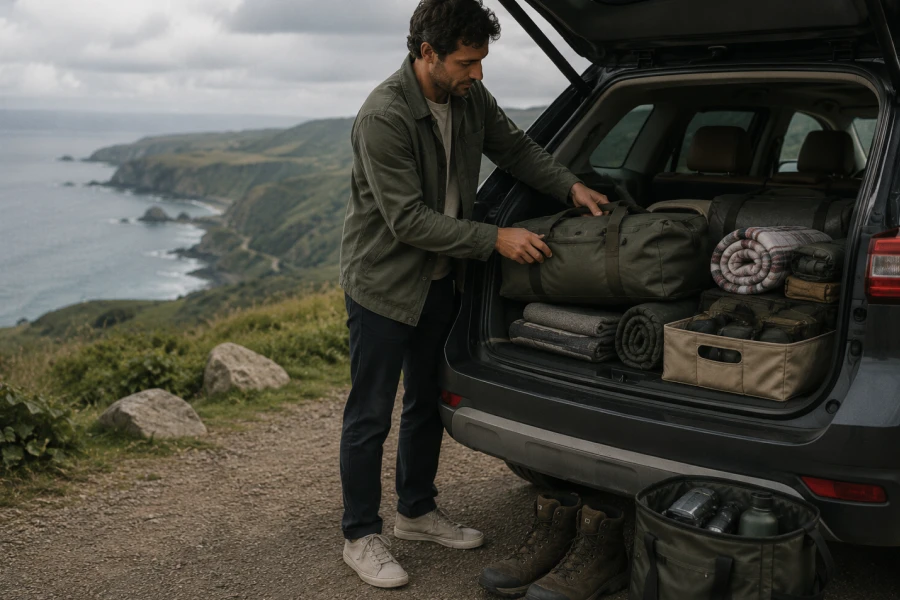
A peaceful drive starts before the engine turns over. A road trip packing strategy creates order before bags enter the car. It gives every essential a clear purpose. It also prevents the familiar search through loose items at the first stop. Smart packing is not about bringing less at all costs. It is about bringing the right things in useful places. That distinction changes the whole journey. Drivers feel more focused. Passengers feel more comfortable. The car becomes a practical travel space rather than a moving storage closet.
Start by sorting items into true need levels. Safety, comfort, food, and overnight supplies deserve different treatment. Identify what must remain reachable during the drive. Put rarely used items into deeper storage. Build road trip packing priorities before collecting bags and containers. This step prevents packing from becoming a last-minute scramble. Consider weather, route length, and passenger needs. Then remove items that do not support those realities. Clear priorities make every later decision easier. They also help prevent overpacking.
Loose packing creates stress because nothing has a dependable home. Divide the car into practical areas. Keep daily items close to the passenger seats. Store overnight bags where they can be removed together. Use car organization zones to separate emergency supplies from comfort items. Choose containers that fit your vehicle. Avoid stacking essential items beneath heavy luggage. Test access before leaving the driveway. A few minutes of setup can save repeated frustration. Zones make cleanup easier at every stop. They also allow everyone to find what they need independently.
Fatigue makes disorganization feel worse. Keep the first few hours especially simple. Put drinks, wipes, chargers, and layers within easy reach. Organize long drive essentials before storing anything decorative or optional. This order protects comfort when traffic or weather changes. It also reduces unnecessary roadside stops. Consider the needs of each passenger. Children may require different access than adult travelers. A calm car supports a calmer driver. Energy is easier to maintain when the environment feels predictable.
Emergency items should be ready, not buried. Keep a basic first-aid kit, flashlight, phone power option, and weather layer accessible. Check local conditions before choosing extra supplies. Store these items in one recognizable container. Do not scatter them throughout the vehicle. The point is quick access during an unexpected moment. Review expiration dates before each major drive. Replace missing items after the trip ends. This small maintenance habit makes future travel easier. Preparedness works best when it remains simple.
Passengers relax faster when they know where their things belong. Give each person a small personal space for immediate items. Use stress-free road travel habits to reduce arguments over lost chargers and snacks. Keep shared supplies separate from personal bags. Explain the setup before the drive begins. A few simple rules prevent unnecessary clutter. Encourage everyone to reset their area at longer stops. This creates a more comfortable cabin throughout the day. Organization becomes easier when it is shared. Good systems should reduce friction for everyone.
Every road trip teaches you something about packing. Notice what stayed untouched. Pay attention to items you searched for repeatedly. Record one adjustment before unpacking completely. Maybe your snack bin needed a better lid. Perhaps your overnight bag belonged closer to the hatch. These observations improve the next trip. Do not rebuild everything after one inconvenience. Change only what clearly caused stress. Over time, your system becomes more personal. That is how practical packing turns into a reliable habit.




Leave a comment